
Zoysia Lawn Care Program – Colleyville, TX
Designed by Aaron Shehan, Practical Agronomist
& Author of The North Texas Lawn Playbook
9 Applications Per Year
Built Specifically for Colleyville’s High-pH Clay Soils
Zoysia can look incredible in Colleyville—tight, dense, dark, and uniform—but only when it is managed correctly.
Most Zoysia problems here come from high-pH clay soils, improper mowing height, thatch buildup, overwatering, disease pressure, and programs designed for Bermuda instead of Zoysia.
Gro Lawn’s 9-round Zoysia program is built specifically for this grass type using real soil data, proper mowing standards, controlled nutrition, thatch management, selective weed decisions, and built-in disease prevention.
Zoysia Looks Great — But It Is Not Low Maintenance
Zoysia can look incredible in Colleyville—tight, dense, dark, and uniform—but only when it is managed correctly.
It is often marketed as “low maintenance,” but in Colleyville that mindset can slowly destroy Zoysia lawns.
Zoysia needs short mowing, controlled nutrition, aggressive thatch management, selective weed decisions, and timing that matches the season.
Gro Lawn does not treat Zoysia like Bermuda. We do not treat it like St. Augustine.
Zoysia Lawn Care in Colleyville Isn’t
One-Size-Fits-All
Every Zoysia lawn in Colleyville is dealing with a different mix of sun exposure, mowing habits, irrigation, drainage, thatch, soil conditions, and disease pressure.
That is why generic lawn programs fall short.
Zoysia needs a different strategy: shorter mowing, cleaner canopy management, restrained nutrition, selective weed control, and decisions based on the condition of the lawn—not a one-size-fits-all schedule.
This program is built specifically for how Zoysia behaves in North Texas, so your lawn can stay dense,
Things to Know About Zoysia in Colleyville
- Zoysia builds thatch quickly when mowed too tall.
- Taller mowing does not improve drought tolerance.
- Excess height traps debris, moisture, and disease.
- Zoysia responds best to short, clean, frequent mowing.
- Spring and fall timing matter more than total fertilizer applied.
This program is designed to keep the canopy clean so Zoysia can perform in Colleyville’s high-pH clay soil and North Texas climate.
Recommended Mowing Standards
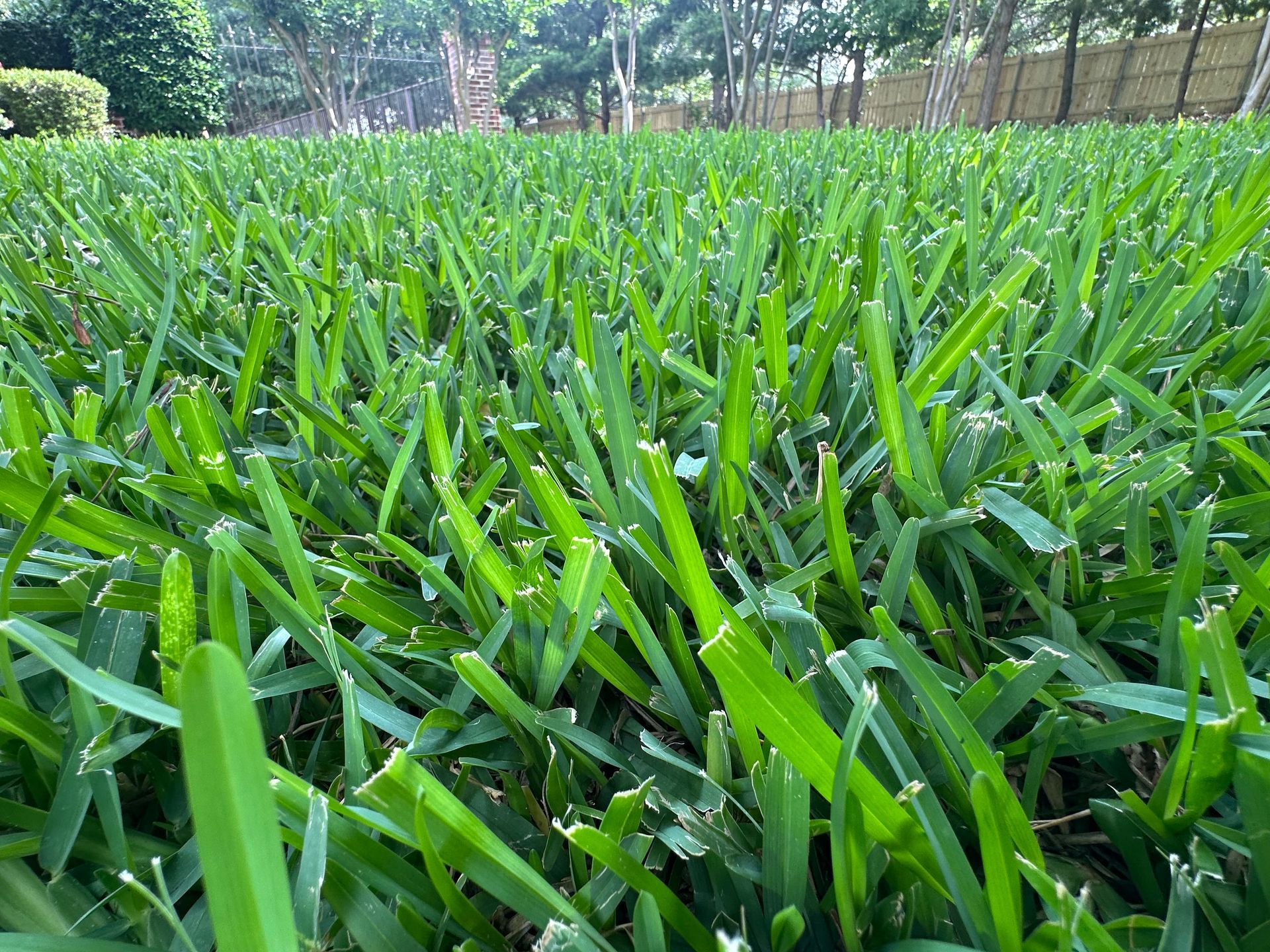
Zoysia performance depends heavily on mowing height and frequency.
Overall height:
1–2 inches
Thin-bladed Zoysia
Emerald, Trinity, Zeon, and similar varieties perform best with a reel mower at 1 inch or lower.
Rotary mower option
When a reel mower is not available, mow at 1.5–2 inches.
Wide-bladed Zoysia
Palisades, JaMur, and similar varieties should generally be maintained at 1.5–2 inches.
Mowing taller does not improve drought tolerance. It accelerates thatch buildup, traps moisture, and leads to long-term decline.
Power Raking & Thatch Management
Zoysia must be power raked.
For healthy Zoysia in Colleyville, we recommend power raking 1–2 times per year.
Spring power raking is especially important. Fall power raking may also be needed when thatch is heavy.
Power raking helps:
- Remove trapped thatch and debris
- Improve oxygen flow and soil contact
- Reduce moisture buildup and disease pressure
- Help water and fertilizer reach the root zone
Skipping this step is one of the most common reasons Zoysia lawns decline in Colleyville.
Zoysia performs best when the canopy is kept short, clean, and open.
New Zoysia Sod — Starter Strategy
New Zoysia sod is never treated like an established lawn.
Starter treatments depend on the time of year, growth stage, and how well the sod has rooted.
During the growing season, we begin with a Rescue Blend to support rooting and recovery.
We do not apply weed control until the lawn has been mowed 2–3 times. This helps prevent stress and protects immature roots and stolons.
During dormancy or the off-season, we begin with granular elemental sulfur and focus on soil conditioning and pH management—not top growth.
This approach helps protect new sod, improve establishment, and prevent setbacks caused by rushing herbicides too early.
What to Do Before Your Lawn Wakes Up in Spring
Early green-up does not come from early fertilizer.
It comes from proper preparation before the growing season starts.
For Zoysia, that means keeping the canopy short, clean, and open so sunlight, oxygen, water, and nutrients can reach the soil and roots.
This spring-prep approach helps reduce thatch problems, improve soil warming, lower disease pressure, and prepare the lawn to respond properly once growth begins.
This is the same approach we use to prepare Zoysia lawns for the growing season in Colleyville.
Our 9-Round Zoysia Program
Gro Lawn’s Zoysia program is designed around short mowing, thatch control, restrained nutrition, selective weed decisions, disease prevention, and long-term soil health.
Each round has a specific purpose. Some focus on weed prevention, some on careful nutrition, and others on soil correction or seasonal protection.
We do not treat Zoysia like Bermuda, and we do not run a one-tank, one-schedule program.
Important Zoysia Difference — Spring Weed Control
We do not blanket-spray post-emergent herbicides on established Zoysia lawns in the spring.
Zoysia gains an advantage when it is not unnecessarily stressed.
Our equipment allows Zoysia lawns to be treated with or without visible weeds, instead of forcing every lawn to receive the same tank mix.
This restraint is intentional—not an oversight.
Why Our Zoysia Lawns Perform Better
Most lawn programs focus on visits. We focus on results.
- Built specifically for Zoysia—not adapted from Bermuda programs
- Short mowing and thatch management built into the strategy
- Measured nutrition instead of aggressive growth pushing
- 12-3-6 blend with humic acid and micronutrients for high-pH soils
- Selective weed control decisions that avoid unnecessary stress
- Disease prevention for vulnerable seasonal transitions
- Elemental sulfur for long-term soil correction
- Designed by Aaron Shehan with 30+ years of North Texas experience
The Truth About Zoysia in Colleyville
Zoysia is a full sun grass.
It can tolerate some shade—but not heavy shade long-term.
In shaded areas, it will thin out and often get overtaken by Bermuda.
If your lawn has:
- Dense tree cover
- Poor drainage
- Constant moisture
Those issues need to be addressed alongside any treatment program.